Today, as I was running some errands and heading to a nearby souvenir shop, I took a moment to stop by the Pa Chu river and admire one of the most iconic landmarks of Paro—our majestic Rinpung Dzong. It was late afternoon, and the clouds were drifting slowly across the sky, casting soft shadows on the whitewashed walls of the dzong. The river, calm yet steady, flowed gently past, carrying with it the stories and history of centuries gone by.
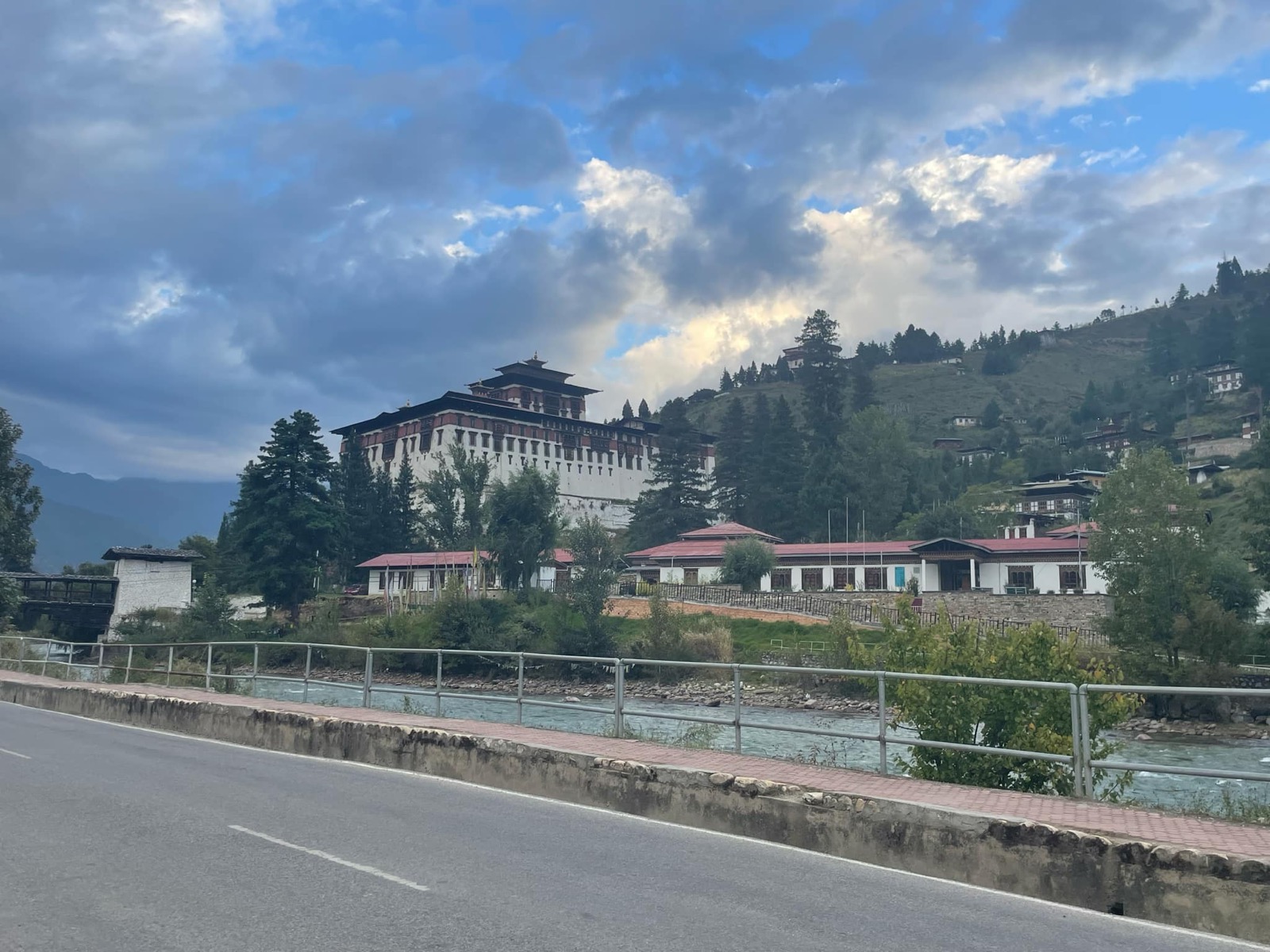
In Bhutan, each of our 20 districts is home to a dzong—a fortress that traditionally served both administrative and monastic purposes. The dzongs are a reminder of Bhutan’s rich history and unique approach to governance and spirituality, often intertwined. The Paro Dzong, known as Rinpung Dzong, meaning „Fortress on a Heap of Jewels,” was built in the 17th century by Zhabdrung Ngawang Namgyal, the unifier of Bhutan. Today, it remains an important symbol of both our spiritual and political life. Half of the dzong houses the district’s administrative offices, while the other half is home to monks who follow their daily rituals and prayers.
The Pa Chu river runs along the dzong’s walls, creating a serene and picturesque scene that seems to blend the natural beauty of Bhutan with our historical landmarks. „Pa” is short for Paro, while „Chu” means river—so literally, it’s „the river of Paro.” In Bhutanese, the word „chu” also simply means water, a symbol of life and purity in our culture. Seeing the river today, I was reminded of how these natural elements are not just part of the landscape but an essential part of our lives and traditions.
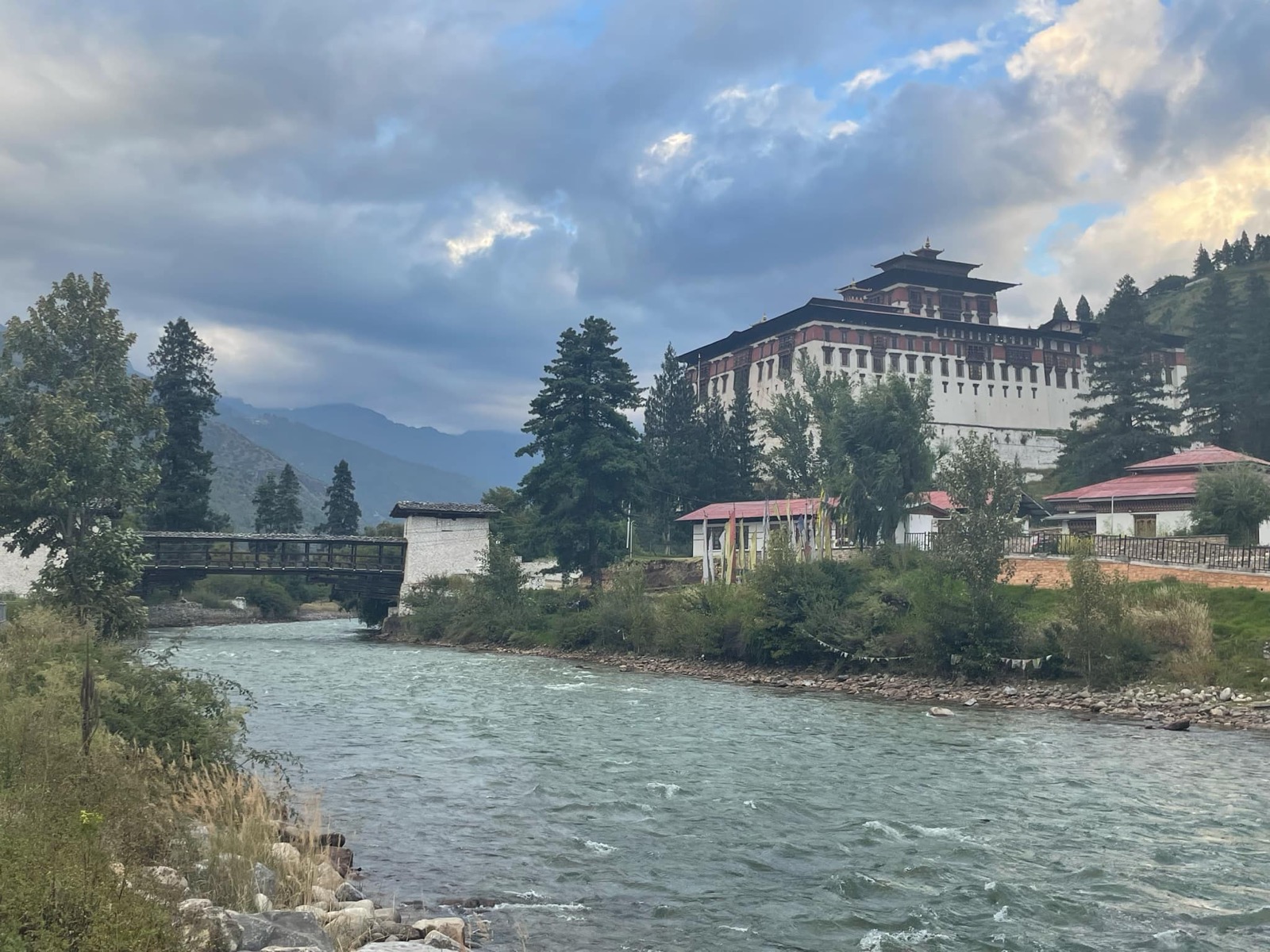
On the left side of the dzong, you’ll notice a traditional wooden bridge, known as Nyamai Zam, which leads to the entrance of the fortress. This bridge, with its sturdy wooden beams and intricate details, has seen generations of people walking across it, from villagers bringing offerings to the monks to government officials attending meetings inside the dzong. Walking across it, you feel a deep connection to all those who have come before, a reminder that our history is not distant, but a living part of our daily lives.
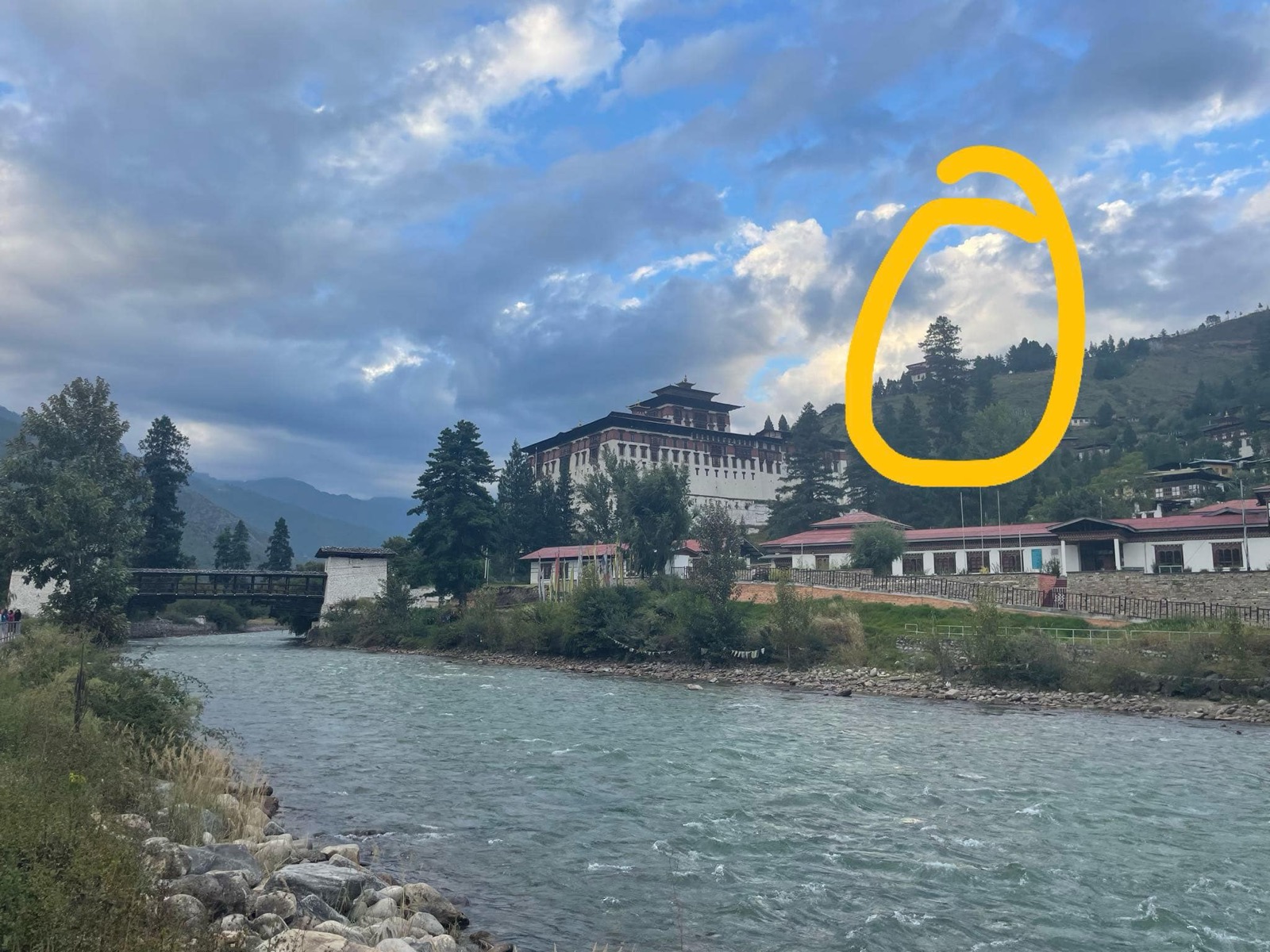
If you look up towards the hill behind the dzong, you’ll spot another interesting building—the National Museum of Bhutan, which used to be a watchtower during the 17th century. In those days, Bhutan faced invasions from Tibet, and the watchtower played a critical role in protecting the fortress below. Today, it stands as a museum, filled with Bhutanese artifacts, from ancient thangkas (Buddhist scroll paintings) to beautiful textiles that showcase the craftsmanship of our people. I didn’t have time to visit the museum today, but it’s definitely worth a visit if you’re ever in Paro.
As I stood by the river, watching the dzong and the museum perched above, I felt a sense of peace. These structures, built so long ago, continue to stand strong, weathering the elements and witnessing the passage of time. They are a testament to the resilience and strength of our culture.
Although I didn’t have a chance to go inside the dzong today, I promise I will take you there on another occasion to explore its sacred halls and courtyards. For now, I hope these photos give you a glimpse of Paro’s rich history and beauty. Bhutan has so much to share, and I’m excited to continue showing you pieces of my everyday life here. Stay tuned for more stories, and next time, we’ll step inside the fortress walls together!
Until then, may the gentle flow of the Pa Chu river and the quiet strength of the dzong bring a bit of peace and inspiration to your day. ✨