Seasons
Seasons
The honest answer? There's no bad time to visit Bhutan. Every season brings something different — and we live here through all of them, so we can tell you exactly what to expect.
That said, some seasons are better for certain experiences. Here's what each one looks like through our eyes:
| Season | Months | Temperature | Weather | Best for |
|---|---|---|---|---|
| 🌸 Spring | Mar–May | 5–24°C | Occasional rain | Trekking, festivals, flowers |
| ☀️ Summer | Jun–Aug | 15–28°C | Monsoon rains | Photography, fewer crowds |
| 🍂 Autumn | Sep–Nov | 5–22°C | Clear skies | Everything — our favorite |
| ❄️ Winter | Dec–Feb | -5–15°C | Cold & dry | Peaceful travel, cranes |
Temperatures are approximate for Paro Valley (2,250m). Higher altitudes will be significantly colder.
March — May
Peak season
This is when Bhutan explodes with color. Rhododendrons — Bhutan's national flower — bloom across the mountains in massive clusters of red, pink, and white. The valleys turn green, the sky clears, and the mountain views are spectacular.
Spring is perfect for trekking and hiking. The trails are accessible, the weather is warm during the day, and the forests are alive with birdsong. It's also when several Tsechu festivals take place — including the famous Paro Tsechu, one of the largest and most colorful in Bhutan.
Our recommendation: March and April are the sweet spot. Book early — spring is popular.
June — August
Low season — fewer visitors
Summer means monsoon, and yes, it rains. But it's not constant — typically afternoon showers that clear by evening. The landscape is incredibly lush, the waterfalls are at their most powerful, and the rice paddies are a vivid green that you won't see any other time of year.
The biggest advantage? Far fewer tourists. You'll have monasteries and trails almost to yourself. And the dramatic cloud formations around the mountains create some of the most photogenic scenes imaginable.
Our recommendation: Great for photographers and travelers who don't mind a bit of rain. Avoid high-altitude treks — trails can be slippery.
September — November
Peak season — our favorite
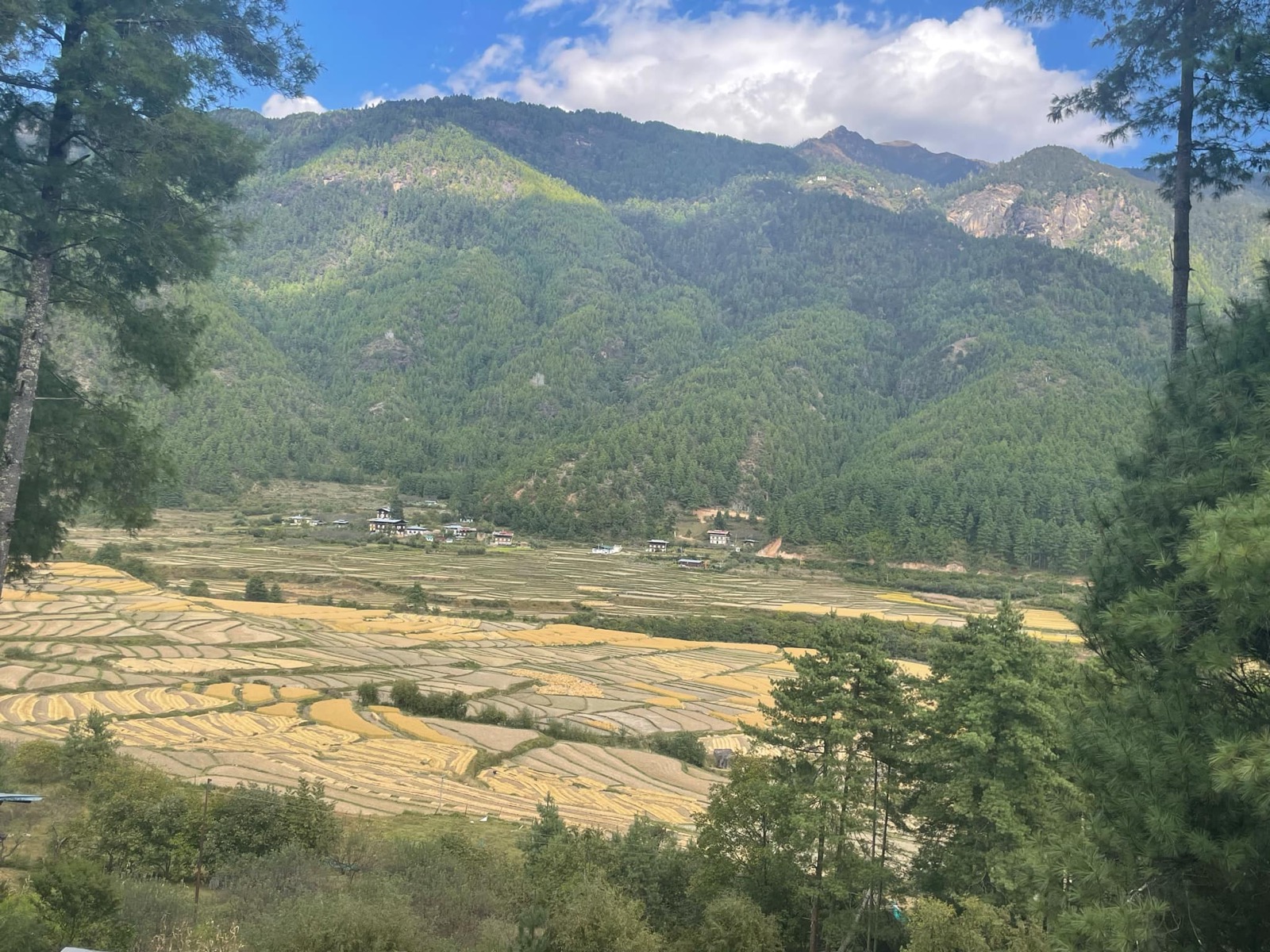
This is when we love Bhutan the most. The monsoon is gone, the skies are crystal clear, and the Himalayan peaks stand out in sharp relief. The rice fields turn golden — that beautiful golden sea across Paro Valley that signals the harvest is coming.
October is the chilli-drying season — every rooftop in the valley is covered in red. It's also when the Thimphu Tsechu takes place, one of the most important festivals. The air is crisp, the mornings are cool, and the light is absolutely perfect for photography.
Our recommendation: October is magical. This is when Sherab's blog stories take place — it's the Bhutan we write about most.
December — February
Quiet season — peaceful and authentic
Winter is when we unroll the thick dragon-patterned carpets and wrap our hands around warm cups of butter tea. It's cold — especially at night and in the mornings — but the days are often sunny with brilliant blue skies. Snow covers the higher peaks and the mountains take on a silvery glow.
This is the most authentic time to visit. Very few tourists, incredibly clear mountain views, and you'll experience Bhutanese life as it really is — slow, warm, and centered around home and hearth. In Phobjikha Valley, the rare black-necked cranes arrive from Tibet, and the locals hold a festival to welcome them.
Our recommendation: Perfect if you enjoy peaceful travel and don't mind bundling up. Bring layers.
Tsechu festivals are Bhutan's biggest celebrations — days of sacred mask dances, music, and communities coming together. They follow the lunar calendar, so dates shift each year. Here are the main ones:
March / April — 5 days
2026: March 29 – April 2
The most famous festival in Bhutan. Held in the courtyard of Paro Dzong, with masked dances, fire ceremonies, and the unveiling of a giant thangka painting at dawn on the final day. The whole valley comes alive.
September / October — 3 days
2026: September 21–23
Held at Tashichho Dzong in the capital. One of the largest gatherings in Bhutan — people travel from across the country wearing their finest traditional clothes. Colorful, vibrant, unforgettable.
February / March — 5 days
A reenactment of a 17th-century battle against Tibetan invaders, followed by the traditional masked dances. Set against the stunning backdrop of Punakha Dzong. Raw, dramatic, deeply historical.
November — 1 day
Held in Phobjikha Valley to celebrate the arrival of the endangered cranes from Tibet. Local children perform crane dances, and the whole valley gathers in gratitude. Simple, beautiful, and deeply moving.
Festival dates follow the Bhutanese lunar calendar and may shift slightly year to year. We'll confirm exact dates for your travel window.
Most of Bhutan sits between 2,000 and 3,000 meters above sea level. Paro is at 2,250m, Thimphu at 2,320m, while treks can take you above 4,000m. Some people feel the altitude — mild headaches, shortness of breath — especially in the first day or two.
Don't worry — we know the signs and we pace our trips carefully. The key is to stay hydrated, take it easy on the first day, and listen to your body. We'll always be there to adjust plans if needed.
Tell us your preferred dates and we'll tell you exactly what's happening — which festivals, what the weather will be like, and what experiences are possible.
Let's Plan Together